
Julia Tallant

Jenn Rogers, MPH

Hannah Rackers, MPH

Lisa Kim, MPH
September 24, 2026
When you hear the word “innovation,” what’s the first thing that comes to mind? For many, it might be splashy new technologies, certain figureheads, or industries built around the promise of disrupting the status quo. But what about innovations built to meet the real needs of young people? Innovation that centers their safety, autonomy and well-being? What if the flashiest solution isn’t always the best one?
At the In/Tend Incubator Hub, we think about innovation differently. Rather than focusing on flashy solutions, we believe innovation should be relational and user-centered, solving problems with communities rather than for them. In doing so, we question some commonly held assumptions about what innovation should look like and suggest a new approach.
Move fast and break things ➔ Rethink and rebuild
The phrase “move fast and break things” has become associated with a tendency to prioritize speed and disruption over the safety and trust of the people a solution is meant to serve. This tradeoff carries real weight when the people affected are young people navigating their health and care. Although there is value in moving forward with imperfect solutions, breaking things without intention and input from end users is reckless and counter-productive to what we aim to accomplish.
Instead, In/Tend encourages teams to use rapid prototyping, user testing, and failure to challenge their assumptions and dive even deeper into the problem. For example, one team made lo-fi mini prototypes for each of their ideas that they shared with end users to gauge their interest. This testing helped the team eliminate ideas that didn’t resonate and focus on developing a prototype their end users were genuinely interested in.
The lone creative genius ➔ Collective success
True innovation is relational, not individual: the product of shared effort, trust, and lived experience.
Stories about innovation often center on the lone creative genius with an idea that changed everything. These stories erase the contributions of teams, communities, and ecosystems that actually make change happen. True innovation is relational, not individual: the product of shared effort, trust, and lived experience.
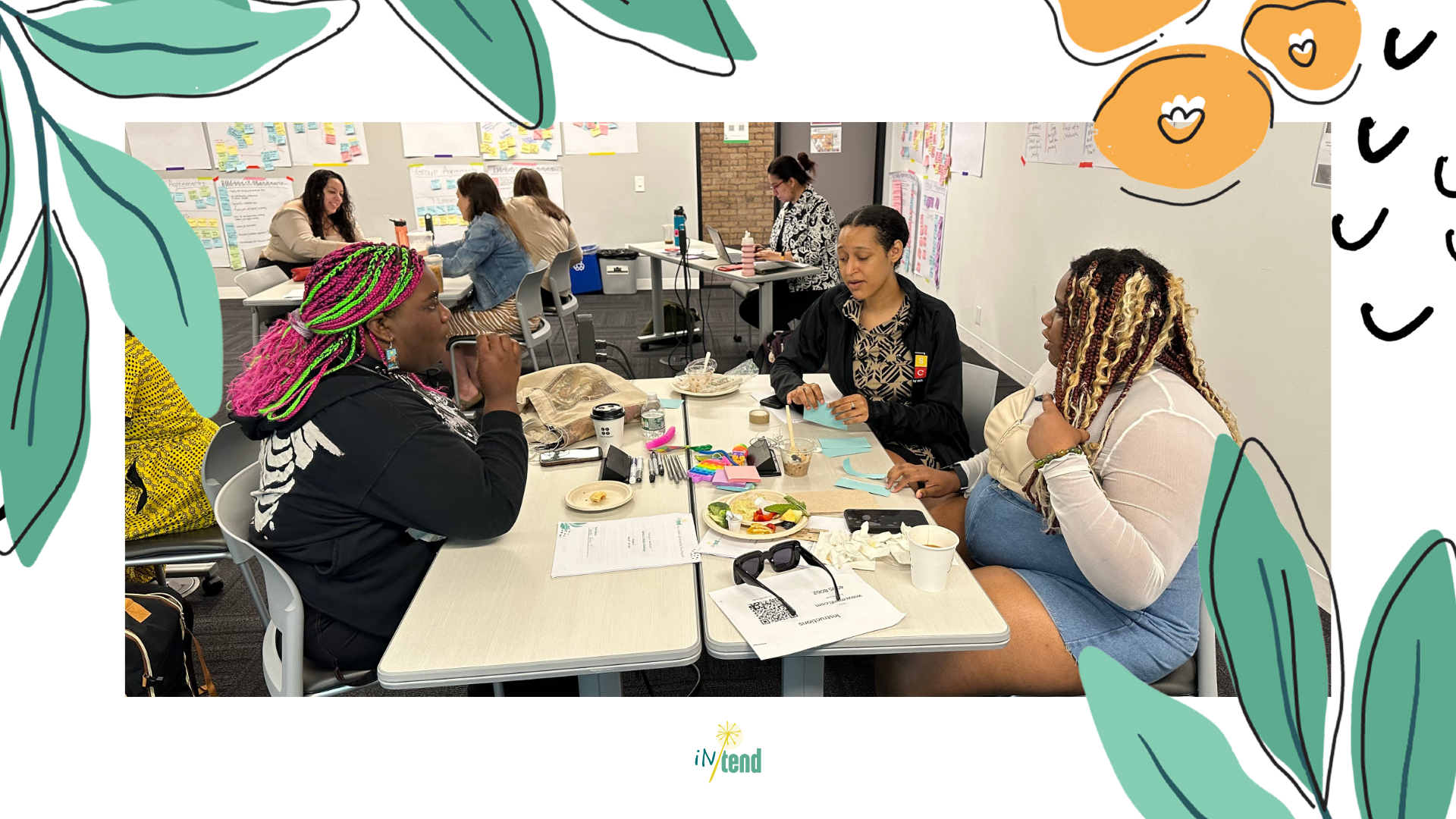
Our teams of three bring unique perspectives and strengths, and it’s that combination that makes their work stronger. For one team, bringing together three members of different organizations allowed them greater access to different communities than they would have had on their own. These connections enabled them to receive insights from end users from the multiple communities they aimed to bring together with their innovation.
Flash over substance ➔ Substance over flash
It’s easy to get caught up in the latest technologies, buzzwords, and trends. These things feel marketable, exciting, and like a way to attract attention. When combined with the assumption that innovation has to be something new, this can result in innovation that’s flashy but lacks substance. Instead of focusing on what’s new and buzzy, we encourage teams to focus on what their users say they need and not dismiss low-tech, simple, or tried-and-true ideas.
Some of our teams’ initial ideas were technology-based, like moderated chatrooms and apps, but after talking with end users about their needs, teams decided to go with lower-tech prototypes that were more accessible to end users.
Inaccessibility ➔ User-centered change
Innovation can feel exclusive. Some consider it the domain of those “in-the-know,” who assume they can anticipate, even manufacture, desires people don’t even know they have. In/Tend pushes teams the other direction: to challenge their own assumptions about what their users want, or even who their users are.
For example, one team came into the process with the assumption that their end users, fathers, were less willing or unable to talk to their children about sexual health. By talking more with their end users and challenging their assumptions, the team learned that they did actually want to talk to their children about sexual health, but didn’t have the space, time, or means to do so. Understanding and empathizing with the people they’re designing for enables teams to build trust with communities and create solutions that truly reflect their needs.
Measuring what matters in innovation
While these are key philosophies of In/Tend, they are also something we assess. As the team evaluating In/Tend, we look at two things: 1) whether teams are creating innovations that are feasible and genuinely reflect user input, and 2) whether the Hub itself is living up to this approach in how it supports teams, challenges assumptions, and builds trust with the communities it serves. Results suggest both are holding true.
Innovation doesn’t have to mean the next best thing. It can be reflective instead of reactive, collaborative instead of competitive, and responsible instead of reckless. At In/Tend, meaningful innovation starts with understanding the experiences of the young people and communities we’re designing for, and it’s how we’re building solutions that actually meet their unique needs.
Photo By: Feng Yu
The Child Trends evaluation team (Jenn Rogers, Hannah Rackers, Lisa Kim, and Julia Tallant) is a partner on the In/Tend Incubator. The team provides evaluation and learning support, working closely with the In/Tend team to collect and make sense of data, surface insights, and support ongoing learning and improvement. Learn more about Child Trends.