Katie Horowitz, MPH
JUNE 18, 2026
This is YOUniversal Education Services with a dispatch from the messy middle: Greetings! Along with so many helpful practices and perspectives, we picked up that term of art—the messy middle—from our wonderful In/Tend coaches. May we say: It resonates right now.
Human-centered design (HCD) is a program design approach that asks us to slow down. To exist in the mess awhile. And to trust that the messiness isn’t something we did wrong or something we’re not intending to, but rather crucial to the process of coming to a solution people really want. Human desire isn’t anything linear. Why should a design process to meet it be neat and tidy?
Are we comfy here? We are…not especially, no! Do we know where we’re headed? Yesterday yes, but today? Not so sure. Have we been tempted to travel roads that feel safe and familiar? Oh yeah, big time! Are we persevering nonetheless? We are! We even trust we’re getting close. (But whew! The sea of stickies. And whew! The chocolate required.)
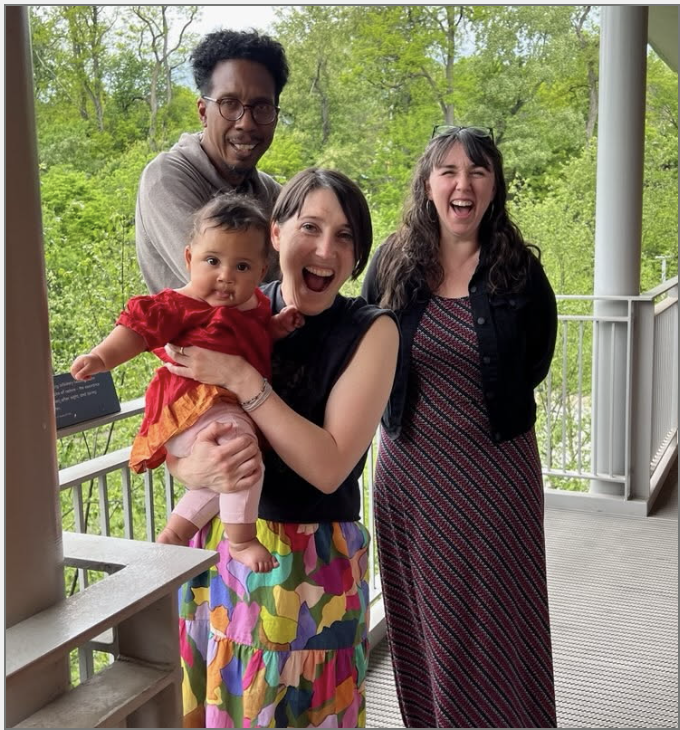
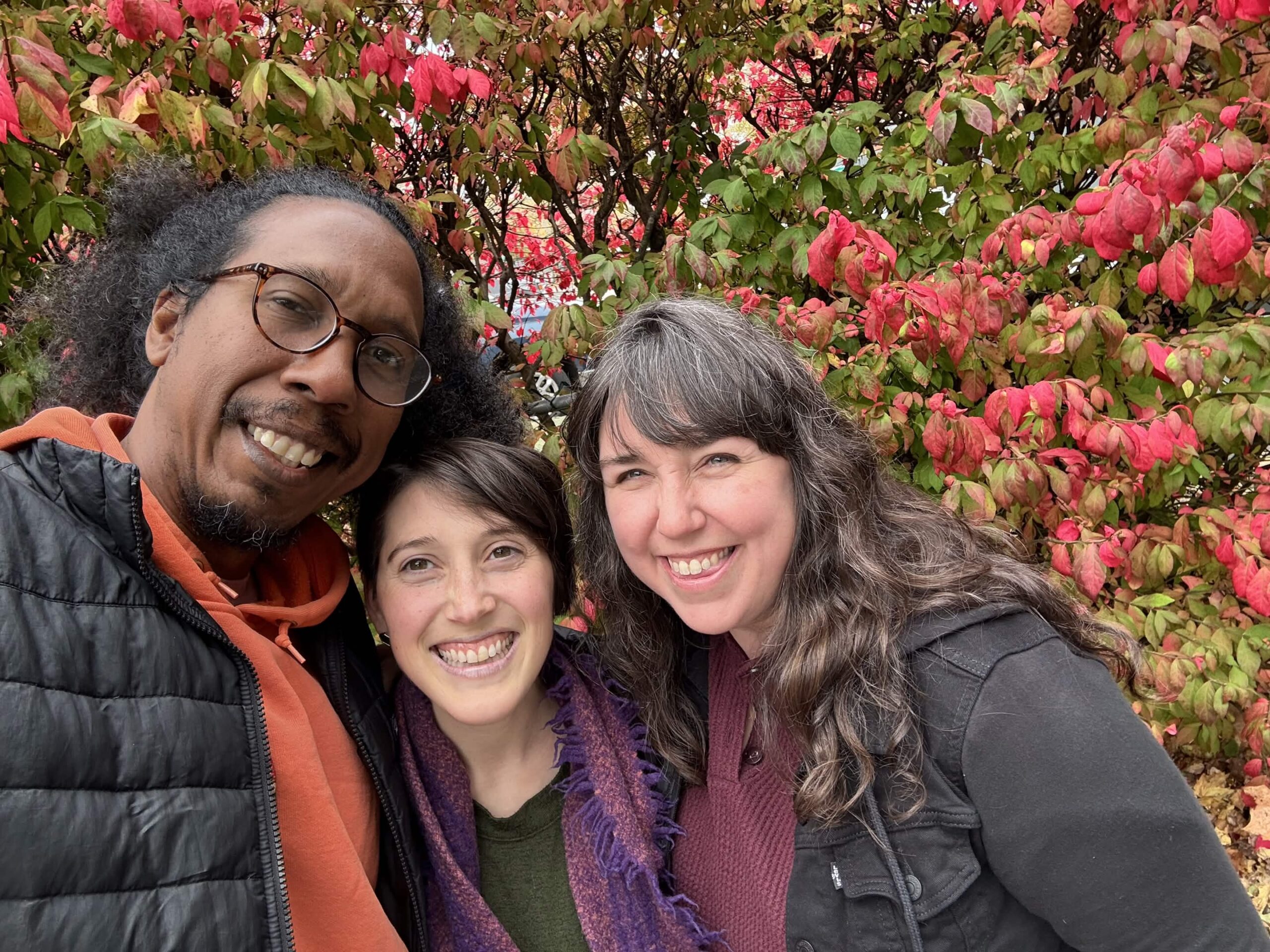
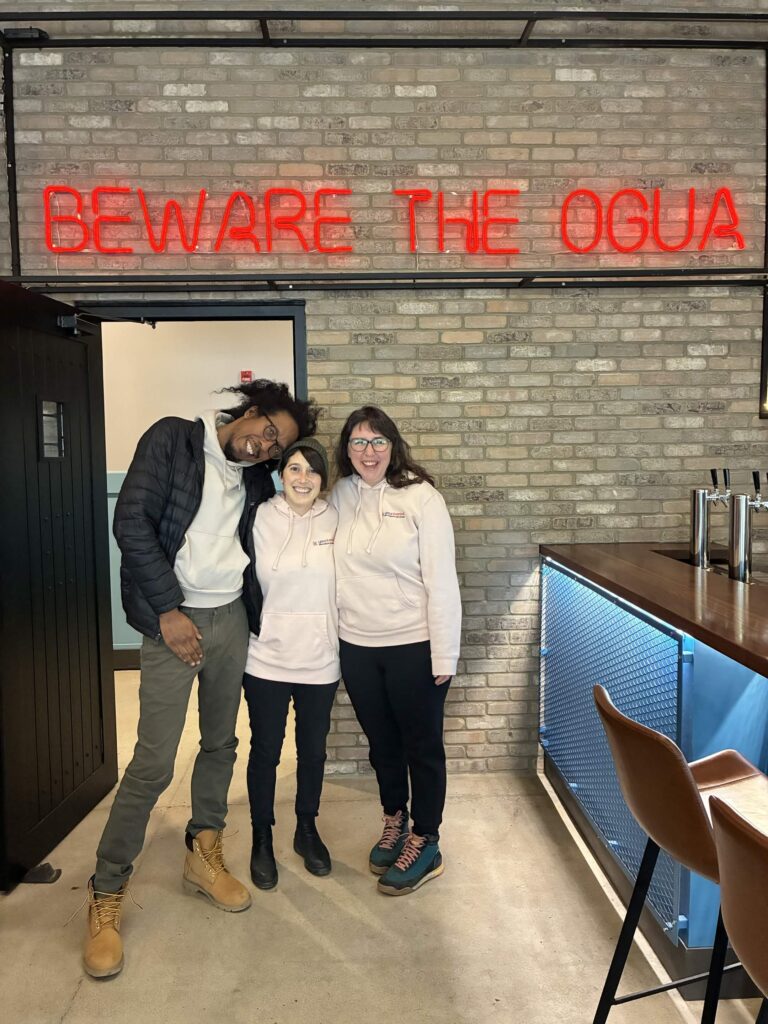
YOUniversal Education Services team members José Garth, Wren Ritchie, and Katie Horowitz
What has kept us moving, aside from sweet treats, is:
1) Our Partners in Innovation
We are most appreciative of the lovely In/Tend team and their thoughtful, constant support, especially when we’ve been stuck. We’ve experienced other wonderful collaborations as educators but never had the privilege before of coaches dedicated solely and lovingly to stewarding our process, and trainers that stay alongside us when the teaching is done. We can’t overstate how supported we’ve felt. When we’ve been swimming in words and ideas (in seas of stickies!), having their insights, perspectives, and questions to pull us up to the surface has kept us afloat and sailing through.
We’ve thought of it often as we meditate on how we hope young people are supported with our coming-soon innovation. (Thank you all, sincerely.)
Also, our peers in the process—our cohort—feel like accomplices: generous, funny, and dedicated to a person. Learning alongside them has been a treasure. It does feel like we’ve all been earnest in taking on the “beginner’s mindset.” To share in the humility of that starting-from-scratch feeling with people who have so much to offer in terms of their personal experiences, and their work in the field, has been nothing short of awesome. Thinking of these lovely new friends as reflections of ourselves gives us hopeful, cozy feelings: such respect for and belief we have in Waking Dreamers, EntreNos, Rooted Collective, and CodED.
2) The Ideas and Inspirations
Many ideas feel familiar, like pieces of them have been percolating for years, but the threads they draw together feel new in ways that bring us life. We’re finding connections between different parts of our practice that we haven’t tried or been able to articulate in the past. Seeing which nuances and elements of the ideas rise to the top for young people, and which fall by the wayside, even when we assume they might matter more, has helped us arrive at insights that have already enriched the way we think about sex ed and youth development. We can tell these conversations will impact the way we work for years to come.
3) Centering Young People
We believe that if our calling is to support them, our job is to listen first.
We know young people deserve thoughtfulness that is not always afforded to them. We believe that if our calling is to support them, our job is to listen first. We love that this project has given us the luxury (and it is that, whether it should be or not) to take time with their words and ideas to do our best for them, and to always come back to centering their voices.
Recently, our conversations with young people and one another have taken us to ideas about risk. When we asked young people and youth-supporting providers questions about belonging, and adult support, we heard them describe how they thrived when youth programs gave them opportunities to try something risky (write and perform an entire play with other teens, travel to another state for a mock government simulation, open up vulnerably to peers in a partial program) IF they also received well-timed and tailored support from adults as they took those risks.
When we listened to their experiences in the sex ed classroom, we noticed them describe almost the opposite: situations and conversations that made them feel vulnerable and on-the-spot, with little support for the social risks they were being asked to take, alongside unrealistic, shame-based approaches to teaching sex ed that asked them to avoid risk in the real world, no matter what.
Although it’s been years since we were teens (decades even, eek!), we talk often on our team about remembering how it felt, almost viscerally, and we feel that again with young people when we hear them describe their experiences. The highs that go high and lows that go low. The exhilaration of new experiences and the way roadblocks feel huge. Times of joy make them buzz; heartbreak makes them ache; the sense they have that their friends are everything; how life stretches out ahead in uncertainty and promise, and how that can overwhelm when they aren’t anchored. All those firsts. All those possible pathways.
The way adolescents feel their feelings strongly, the way they take strategic risk, embrace joy and prioritize social relationships—these are not byproducts or pathologies of their age and stage, but in reality, central projects of their healthy development (thank you Adriana Galván and UCLA’s Center for the Developing Adolescent for this framing). When we think about how to support young people, we should come understanding that their brains are wired for exactly these things during this time, and if we’re wondering why about a young person’s decisions or desires, this framing can help us meet them where they are, and can help us encourage them to play to their strengths.
When we tell them to tone it down, say the feelings will pass, that their breakup isn’t a big deal, or that they should just say no, we deny the biological realities of their brains, and the way our team interprets it is that we actually ignore characteristics that amount to superpowers.
Risk-taking in adolescence helps young people grow and learn in ways that prepare them for their lives.
As we’ve listened to young people share their thoughts, we’ve wondered how we might come up with an innovation in our field that can holistically address their relationship to risk and can take real stock of all of the emotions—positive, negative, and in between—that come along with risk-taking in adolescence. As we ideate, we are thinking about the fact that it takes courage for young people to take risks. We also recognize that young people choose to take risks for many different reasons. Some of those reasons are developmentally and biologically motivated, and many of them are not the reasons we often assume. Risk-taking in adolescence helps young people grow and learn in ways that prepare them for their lives. But there are different types of risks, and there are different levels of risk, and we think young people would love thoughtful support that caters to their autonomy while they work to sort that out.
For us, as we push through these last weeks of the program, sift through the perspectives young people gifted us by sharing, and consider the insights we fought hard to call up through the word salad, we hope to combine all the ingredients on this tabletop (Miro board!?) to whip up a dinner that’s delicious: a good idea, and one that will help young people live their best lives, making decisions about relationships, sex, and sexuality that support their healthy development.
The electricity of it all helps us trust that although we’re not there yet, the idea we finally distill will take us somewhere new. So we’re pushing (sailing? snacking?) through the discomfort and can’t wait to share what we’re learning with the world!
Interested in learning more about In/Tend and how you can join our teams of dreamers, doers, and changemakers? Make sure you’re on our email list to get the latest updates and stay inspired.
Photos By: YOUniversal Education Services
The YOUniversal Education Services team is José Garth, Katie Horowitz, and Wren Ritchie. We are dear friends and collaborators working in communities across Pittsburgh, PA, to provide youth-centered health and well-being interventions that are practical and culturally responsive, as we help young people build the skills and knowledge to live their best lives. We believe in autonomy, transparency, respect, collaboration, and joy; we believe health is a right; we believe young people are powerful; and we believe sex education is critical. Our time as In/Tend Innovators has enriched our practice and our lives! We couldn’t be prouder of our journey through the process or more grateful for what we’ve learned along the way.