
JUNE 25, 2026
Summer in America. Short shorts, rocket pops, and fireworks. New York is humming—still riding the high of a long-awaited Knicks championship. The World Cup is underway. The nation is gearing up for a milestone birthday.
And for some lucky son-of-a-guns, it’s also grant-writing season.
Across the country, youth-supporting professionals are dreaming up new health programs, products, and campaigns with the hopes of securing funding and turning great ideas into impact. Others are refining existing ones, testing their approaches, and figuring out how to scale what already works.
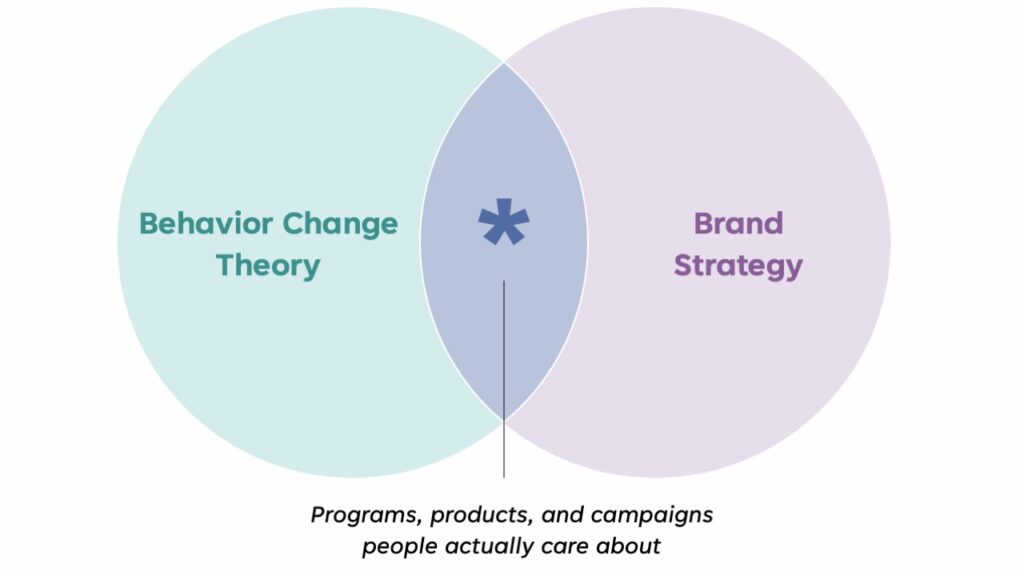
Whether you’re building something new entirely or helping a promising idea reach greater heights, the initiatives that engage deeply and early with both behavior change theory and the art and science of branding are often best able to win hearts, change minds, and shape behavior.
In fact, brand strategy and behavior change theory make surprisingly good teammates.
What You’re Up Against
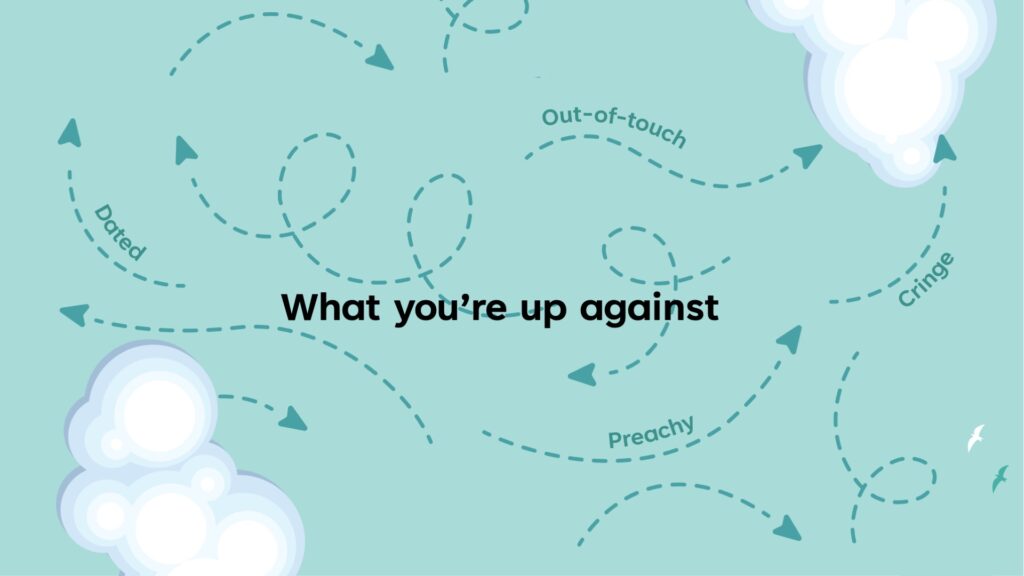
Let’s face it. Long before you launch your program, product, or campaign, there are already messages floating around about it—or at least about things like it.
Not messages you wrote, but messages you inherit.
In other words, any sexual health program enters a larger story that is already being told.
After all, people don’t meet any one sexual health program empty-handed. They bring their prior experiences, expectations, and assumptions with them. In other words, any sexual health program enters a larger story that is already being told—a narrative ether thick with cultural scripts, contested meaning, and implicit power structures.
Maybe it’s that too often healthcare services are confusing, opaque, and unnecessarily bureaucratic. Or maybe it’s that too much of sex education feels preachy, unrealistic, or worse yet…cringey.
Fair or unfair, these perceptions create the narrative environment your program enters.
Think of these narratives as prevailing winds. They’re already blowing, pulling the story about your program, product, or campaign in a particular direction.
A strong brand won’t eliminate these winds, but it can help you navigate them, clearing the way for behavior change to happen.
Finding Your Role
But how do you compete in an attention-scarce world?
In a sea of messages, people need clear signals. The best programs, products, and campaigns approach sexual health through clear and vivid narrative and visual strategies.
Some use humor and play.
Others are more earnest, inspiring courage and self-belief.
Others still channel urgency, inspiring people to action.
Strong branding brings a distinct personality to every creative decision and message. More foundation than finish, strong branding ensures health content is relatable and resonant.
This is where archetypes come in. Choosing one or two brand archetypes early can help guide creative decisions and create a more consistent experience across messages and interactions. A couple of well-chosen archetypes will help connect your brand to familiar human motivations and desires, making it easier for people to understand what you stand for and why it matters to them. Simply put, they make your brand recognizable.
Of course, archetypes are ancient—as old as storytelling itself. In branding, creatives and content creators have long used them as a kind of scaffolding—a starting point for building vibrant, relatable brands.
At Healthy Teen Network, we’ve taken traditional brand archetypes and reimagined them through the lens of sexual and reproductive health. Each is built upon a human drive: timeless impulses that fuel a brand’s purpose and presence in the world.
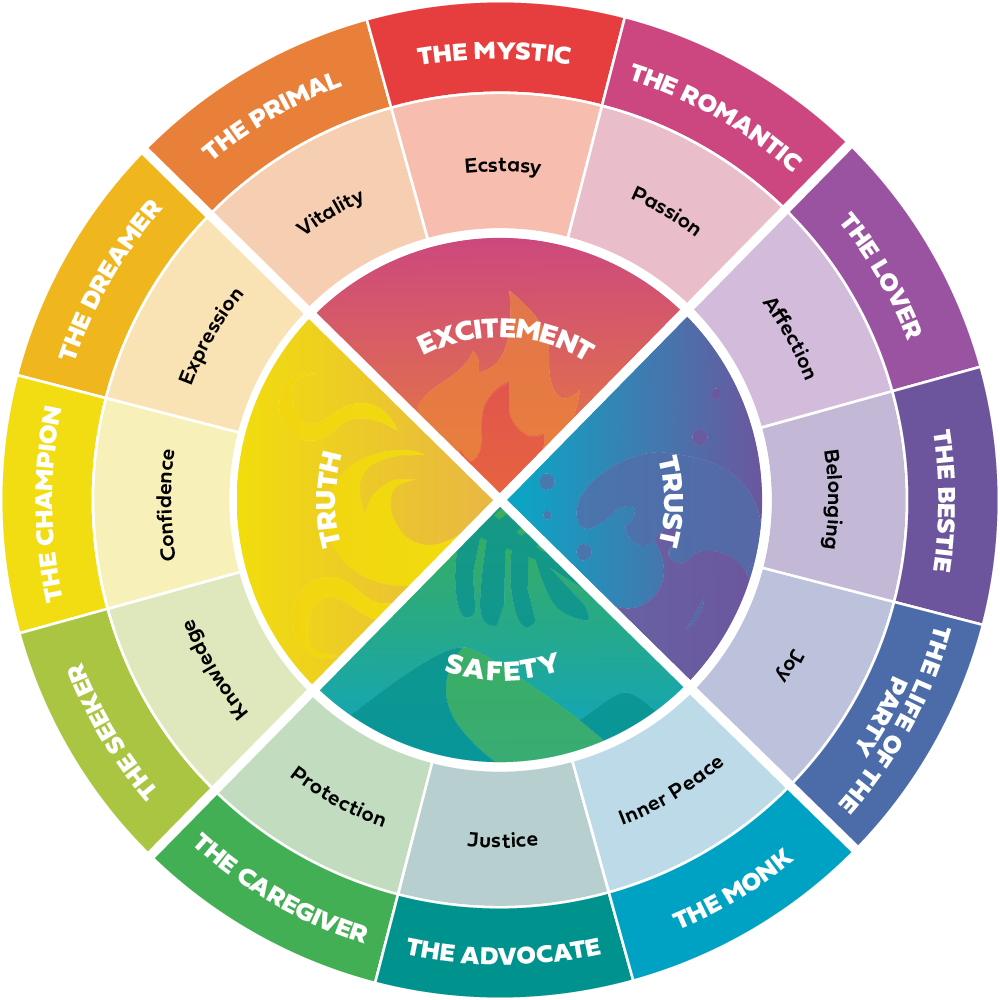
A Healthy Teen Network visualization, inspired by the archetype wheels of Iconic Fox and others
Here’s a couple of our favorites:
- The Champion (drive: confidence): The Champion seeks confidence through mastery, starting naïve but eager to grow. They learn by doing, building self-esteem with each new skill gained. Their gift is to show that growth is possible, inspiring others to begin their own journeys. But when insecure, they may rely too heavily on external approval or fear failure before it comes.
- The Life of the Party (drive: joy): The Life of the Party thrives on bringing people together through laughter, warmth, and contagious good energy. They are magnetic, playful, and gregarious—the friend who turns even heavy moments into opportunities for lightness and connection. Their gift is to remind us that sex and health can be fun topics. Yet when shadowed, they may avoid depth, masking discomfort with constant humor or seeking attention instead of true connection.
- The Advocate (drive: justice): The Advocate burns with the desire to protect dignity and demand fairness. They are activists at heart, standing at the front lines to confront inequity and defend the vulnerable. Their gift is to channel integrity and courage into movements that reshape the world for the better. Yet when shadowed, their zeal for justice can harden into rigidity or moral superiority.
Luckily, with endless combinations of archetypes, no two programs, products, or campaigns have to show up in exactly the same way. In fact, the strength of the field comes from having many different voices navigating the same waters. A myriad of vibrant brand personalities can exist alongside one another, each helping young people navigate sexual health in their own ways.
So, before you choose a logo, choose a role. Because while selecting an archetype won’t replace behavior change theory, it just might clear a path for it.
Editor’s note: Great ideas deserve great brands. If you’re building a program, product, or campaign, we’d love to help.
Nicholas Sufrinko is a Senior Communications Manager at Healthy Teen Network and is the brand and creative lead behind many of our projects. You can often find him hiking, biking, or stargazing. Read more about Nick.