
DECEMBER 18, 2025
Let me paint a familiar picture.
You hit a certain age, and suddenly the internet, your friends, your doctor (maybe), your algorithm—everyone—is handing you a checklist of the Olympics of Existing in a Changing Body:
- Stack your supplements (collagen, magnesium, creatine, probiotics, vitamin D3)— basically a small pharmacy.
- Limit the “white devils”: sugar, flour, rice, pasta.
- Prioritize protein like it’s your job, because apparently it is now.
- Sleep more.
- Exercise more.
- Lift heavy things.
- Track your muscle mass.
- Do brain games.
- Meditate
- Reduce stress.
- Also, don’t forget to breathe correctly, apparently.
And the wildest part? The list keeps growing. Every week, there’s a new “must-do” to avoid turning into a tired, foggy, achy version of yourself. You’re trying. You really are.
And then one day…you wake up and realize you are not the same person you were last year.
And then one day…you wake up and realize you are not the same person you were last year. Maybe not even last month. Not in a cute “new chapter” way either. More like a “wait… what is happening to me?” way.
So, there is a plot twist no one warned you about…
Maybe your memory starts slipping. You walk into a room and forget why you’re there. You lose words mid-sentence, as if they fell through a trapdoor. You reread the same paragraph three times and still can’t tell what it said. And it’s not subtle. It feels like a real cognitive drop. The kind that makes you wonder if something is seriously wrong.
Or maybe your mood changes show up first. You’re not feeling like yourself. You lose interest in things that usually light you up. You snap at people you love. You feel anxious or low in a way that doesn’t match your life. Sometimes panic shows up like an uninvited guest. Sometimes sadness does. Sometimes both.
You check your environment. Your stress. Your relationships. Everything looks the same. But you don’t feel the same.
Or maybe it’s sleep. You wake up at random hours, as if your brain has a new hobby: 3:07 a.m. existential spiraling. You can’t fall back asleep. You start your days exhausted, living in a fatigue no nap can fix.
Then comes the weight shift. Nothing about your routine changed. But your jeans disagree.
Your body starts redistributing weight like it’s redecorating without asking you. You work out. You eat “right.” Still, your body does what it wants. And you’re standing there thinking, “Okay…cool…is this my fault? Am I doing something wrong?”
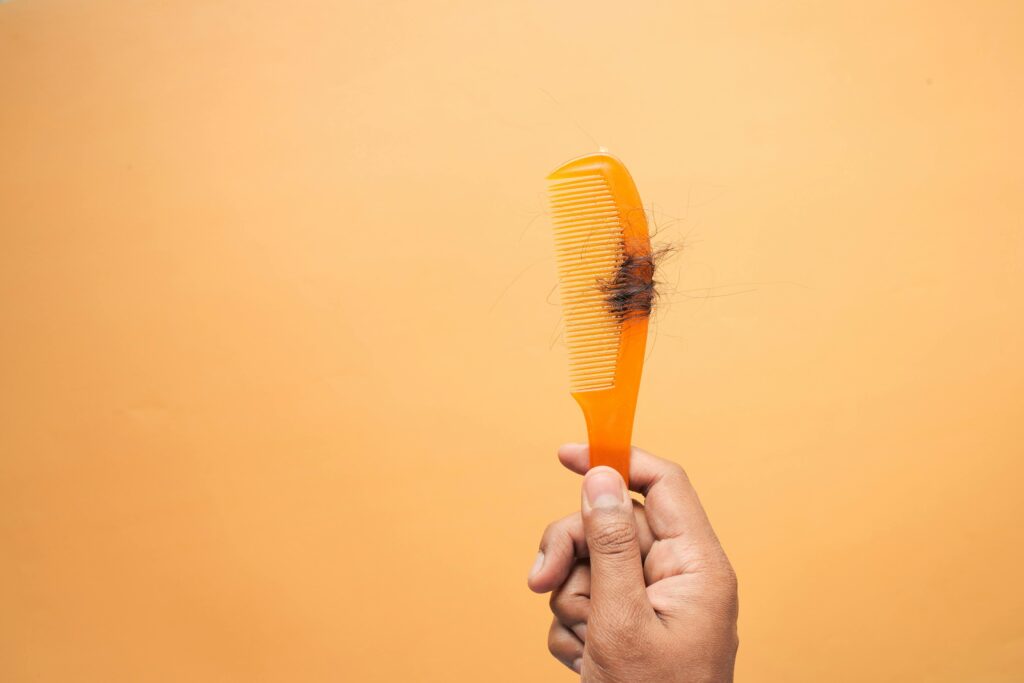
And then there’s hair.
You step out of the shower, brush your hair, and a whole chunk falls out like a dramatic mic drop.
You freeze. You stare at the brush. Your mind goes places your heart doesn’t want to go.
“Am I sick?”
“Is something wrong with me?”
“Is this normal?”
Joint pain. Body odor changes. Random aches. A body that feels unfamiliar. The list goes on. And on. And many people are in this transition for 5 to 15 years.
So yeah—this is not a cute little phase. This transition is a long chapter. Sometimes a whole trilogy.
The loneliest part of all is thinking you are the only one because nobody taught us this.
The loneliest part of all is thinking you are the only one because nobody taught us this.
We learned about periods in school (maybe). We learned about pregnancy and contraception (sometimes). We learned about hot flashes as a punchline in movies. But no one explained that perimenopause can mess with your brain, your sleep, your mood, your strength, your metabolism, your hair, your joints, your confidence, and your sense of self—all at once, or in whatever chaotic order it chooses.
So, when it starts, a lot of people don’t think, “Ah, yes, perimenopause.”
They think:
- “What’s wrong with me?”
- “Why can’t I handle life the way I used to?”
- “Am I depressed? Am I burned out? Am I failing at adulthood?”
- “Is this early dementia?”
- “Is my body falling apart?”
And because we don’t talk about it much, we start gaslighting ourselves. We assume we’re overreacting. We think we’re weak. We believe it’s just stress, just aging, just life.
Meanwhile, there are so many people having the same thoughts alone—on bathroom floors, in front of laptops at 2 a.m., staring at hairbrushes, scales, or calendars—confused and scared. Even if you figure out what’s happening, the next obstacle is…everything else.
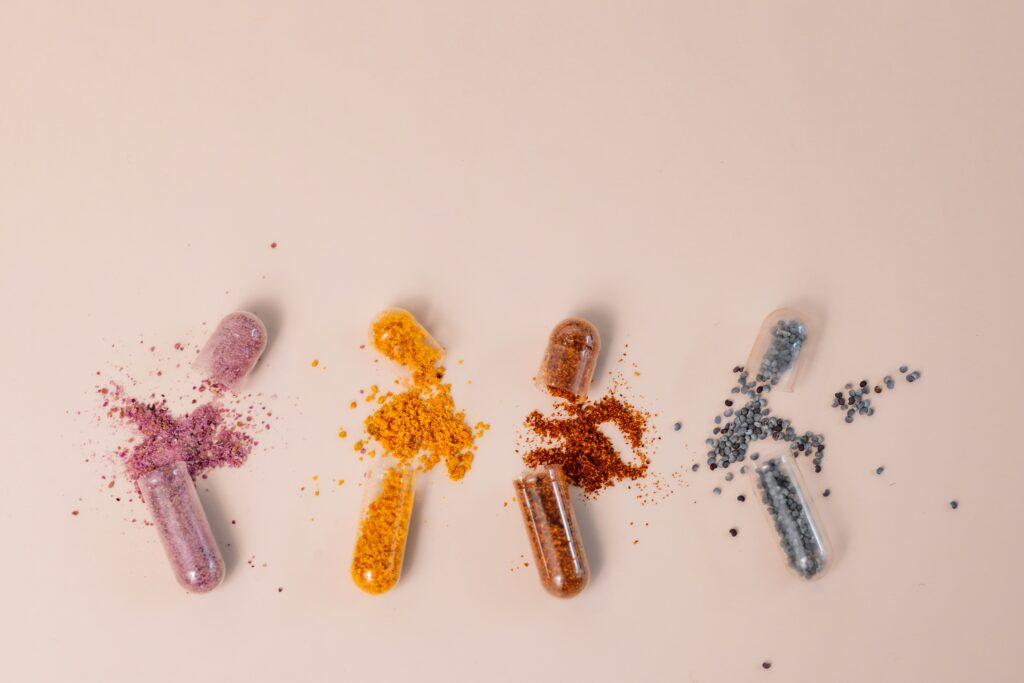
You’re told to take supplements. But which ones? What’s actually helpful, and what’s just marketing with a cute label and a podcast host?
Vitamin D3? Iron? Magnesium? Creatine? Collagen? Probiotics? Sure. Great.
Now add in herbs, grains, powders, tinctures, “hormone-balancing” gummies, and eight million opinions online. Then comes the doctor part. You ask for tests. You try to explain symptoms that are real but hard to measure. And if you’re lucky, you get someone who listens and knows what perimenopause actually looks like.
If you’re not lucky? You get dismissed. Told “you’re fine” or handed an antidepressant without an honest conversation about hormones. Or sent home feeling smaller than when you arrived.
Hormone replacement therapy adds another layer. Some providers hesitate. Some refuse. Some people want it and can’t access it easily. Private companies are stepping in to fill gaps that mainstream health care often leaves wide open.
No matter where you land, it shouldn’t feel like this much of a scavenger hunt.
So, how did we get here so unprepared? Here’s the truth: We were never trained for this stage of life.
Here’s the truth: We were never trained for this stage of life.
Not practically.
Not emotionally.
Not culturally.
We didn’t grow up building muscle as a lifelong health habit. We didn’t grow up learning how to eat for hormonal and metabolic change. We didn’t learn that strength training matters more as we age—not for aesthetics, but for function, stability, and brain health.
Now we’re asked to build new habits in a decade when life already demands everything: Jobs. Kids. Parents aging. Relationships. Bills. And then on top of that: “Hey, rewire your entire lifestyle, or you’ll feel terrible for the next ten years. Good luck!”
Cool, cool, cool. Totally reasonable.
And bigger than that—why is the research so thin? Why isn’t this basic education in public schools? Why aren’t colleges teaching this as part of health lifespan education? Why don’t workplaces treat this like a real biological transition with real impact?
Perimenopause isn’t niche. Half the population goes through it. And yet many people enter it like stepping into a dark room without a flashlight.
We Deserve Better—And So Do the People Coming After Us
Yes, we need to educate ourselves now. Read. Share. Ask. Support each other. Find good care. Advocate hard. But that alone isn’t enough. Because we can’t turn back time for ourselves. What we can do is build a better runway for the next generation. That means:
- Talking about perimenopause before it starts
- Teaching adolescents how hormones shift across a lifespan
- Normalizing strength training and protein as health tools, not diet culture
- Investing in research that treats menopause as a major life transition, not an afterthought
- Pushing schools, colleges, healthcare systems, and employers to catch up to reality
So that in 15 years, a younger person isn’t alone on a bathroom floor thinking they’re broken…when they’re actually going through something natural, typical, and very real.
We can’t erase the chaos of perimenopause. But we can absolutely erase the silence around it. And honestly? That would be a pretty strong start.
PHOTO BY: BERIT KESSLER
Milagros Garrido, MS, PMP, is the Director for our Innovation and Research Department at Healthy Teen Network. Always ready for a challenge, she is at her best when she is finding clever and new ways of using technology to make the seemingly impossible a reality. Read more about Mila.