
DECEMBER 4, 2025
At In/Tend, we’re on a mission to enhance the sexual and reproductive health and well-being of all young people. Through human-centered design, we cultivate and empower teams to develop innovative solutions to real-world challenges. We aim to build a world that affirms every young person, ensuring they have the agency, opportunity, and access to prioritize their bodies, relationships, and futures.
We’re thrilled to introduce the second cohort of innovation development teams who are bringing creativity and courage to the In/Tend Incubator Hub.
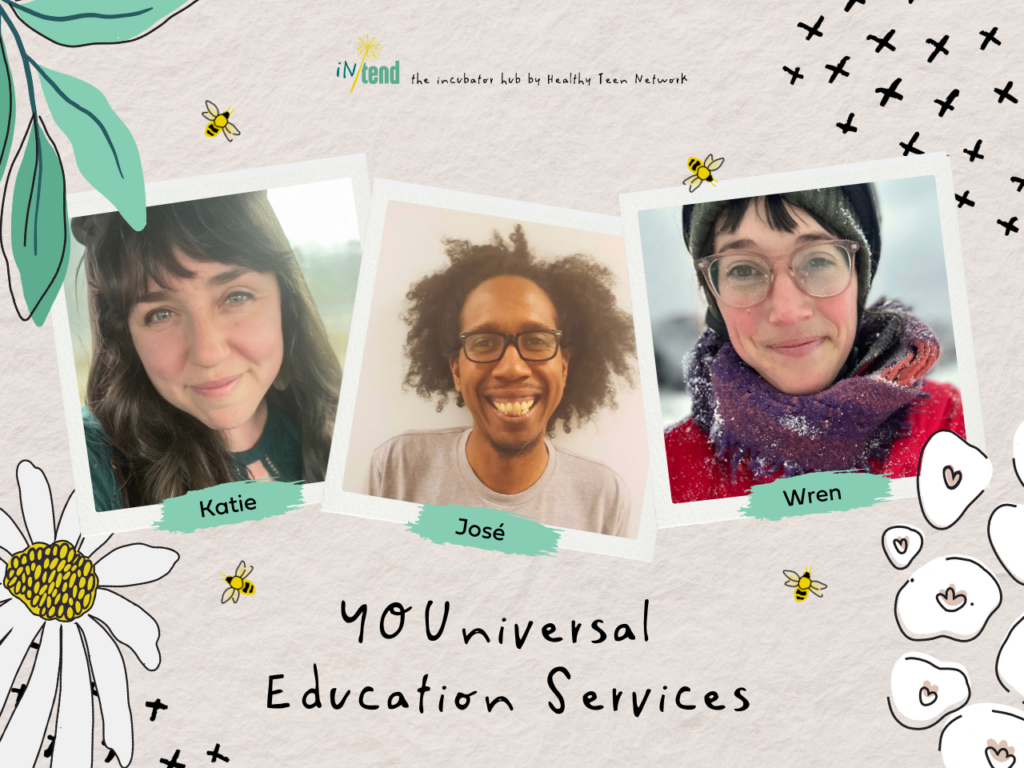
YOUniversal Education Services
Meet the Team
José Garth is a caretaker, educator, facilitator, and the Founder of YOUniversal Education Services. They have a focus on positive youth development and healing-centered health and wellness programming. José learns and grows through play of all kinds— from silly wordplay to card and board games.
Katie Horowitz is the Director of Community Health Strategy and Evaluation for YOUniversal Education Services. Her focus is on removing barriers to health and supporting young people; she has 15 years of experience in youth development, sex education, and delivery of health interventions across Southwest Pennsylvania. In her spare time, Katie loves splashing in creeks with her 7-year-old and spending time in Western PA’s gorgeous rolling mountains.
Wren Ritchie is a sex educator serving as Director of Curriculum and Program Development for YOUniversal Education Services. Wren’s expertise is in peer education, co-creating spaces for young people to share their authentic selves and brilliance with their communities. Wren loves biking and being among the trees.
Their Challenge or Focus
The gap in long-term, youth-led, community-rooted, and holistic sex ed programming.
Why They Applied
We have been working together for over ten years within the field of sex ed. This opportunity provides us with the space, freedom, trust, structure, and support to play and learn about cultivating youth power in an intentional, sustainable, and dynamic way.
One Thing They Have Already Learned
It’s been really interesting to think about the ways we’ve moved intuitively through program design in the past and to see where that lines up with the practices of human-centered design. Having language and learning more about this formalized model is already putting an incredibly helpful structure on our process, and it feels like it will support us in building a program that’s truly responsive to the people who will shape and engage with it.
What They Are Looking Forward to in Their Innovation Journey
Our own personal growth: recognizing where our biases are getting in the way of liberatory practices. Where are we getting in our own way?
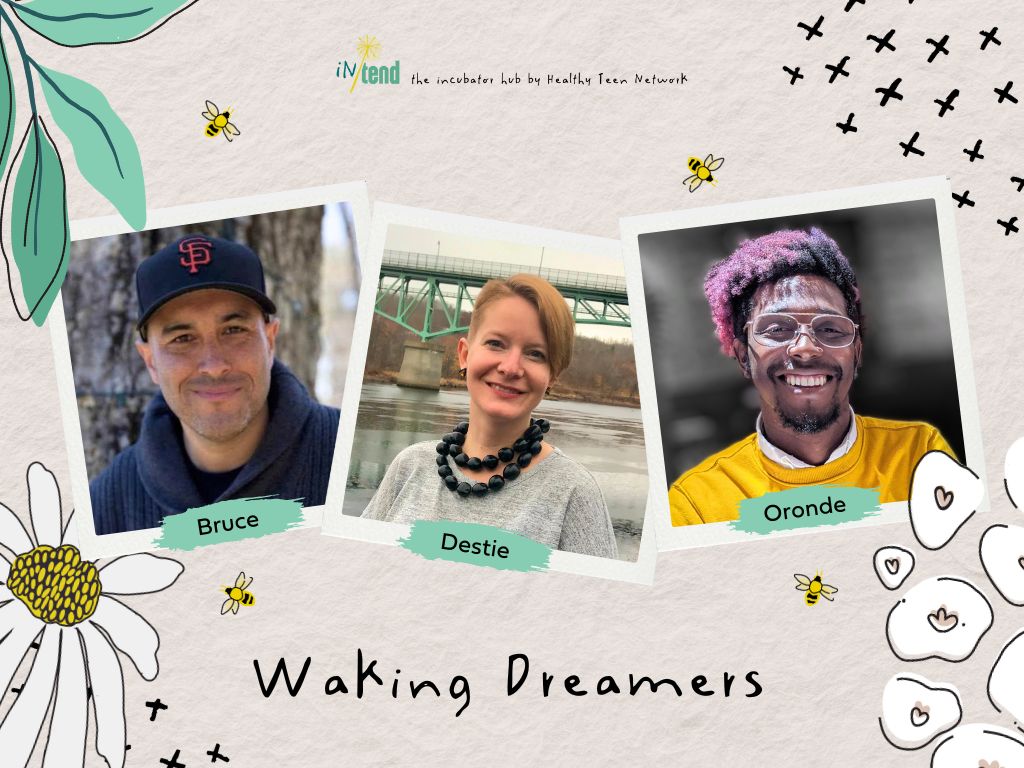
Waking Dreamers
Meet the Team
Destie Hohman Sprague is the Executive Director of Hardy Girls, a Maine-based nonprofit that focuses on feminist activism and empowerment for girls and nonbinary youth.
Bruce King is the executive director of Maine Boys to Men, an organization that empowers boys and men to embrace and reimagine their masculinity and build safer, stronger communities. Bruce is a Mexican-American with various lived experiences that he brings to his work. He also serves on various boards and committees and serves as the co-chair of Maine’s permanent Commission on the status of racial, indigenous, and tribal populations.
Oronde Cruger graduated with a degree in neuroscience from Bowdoin College, where he studied learning and memory, as well as hormones and behavior. His background, mixed with his deep love for facilitating difficult discussions, has served him well while working with young folks trying to better understand the complexities of intimacy. His experiences helped to inform his 2018 TEDx talk about redefining masculinity and the importance of vulnerability in the process.
Their Challenge or Focus
We are working together to identify how three organizations, with three separate but related missions and groups of end users, can create a shared program to help young people build community and communicate with each other more effectively about gender and sexuality.
Why They Applied
We were so excited about the idea of having dedicated time, resources, and support to help us meet our missions (connecting young people to communicate about gender norms) in new ways as a team.
One Thing They Have Already Learned
One team member summed it up really well: “The process of human-centered design is built upon challenging your own assumptions, and I think that is a skill that I’ve paid lip service to but may not have done as good a job as I wanted to in the past.” Getting comfortable with this realization has been a learning curve and very interesting!!
What They Are Looking Forward to in Their Innovation Journey
We know we have so much to learn from our end users, and we can’t wait to start connecting with them!
We are really excited to dive into the development phase. We know we have so much to learn from our end users, and we can’t wait to start connecting with them!
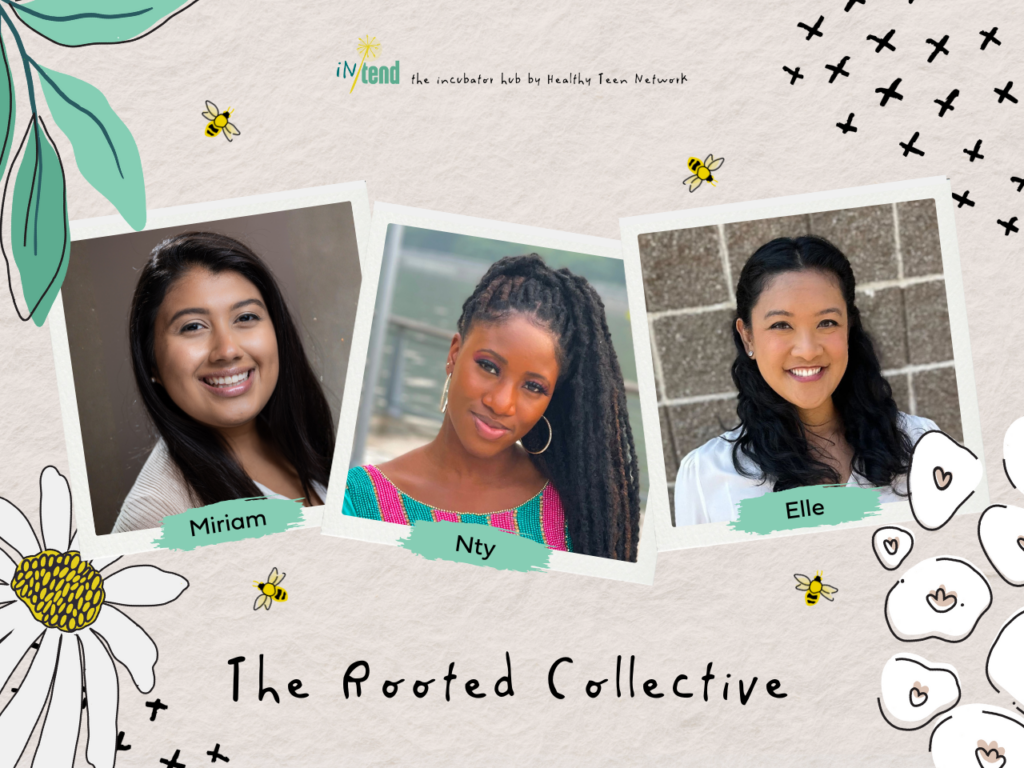
The Rooted Collective
Meet the Team
A Los Angeles native and Chicago transplant, Elle Lynn Quimpo creates spaces for people to engage, learn, and build community by fostering dialogue that sparks connection and collective growth. Driven by a mission to advance health and well-being through collaborative leadership, continuous learning, and meaningful relationship-building, she believes in following young people’s leadership to co-create innovative pathways toward healthier, more equitable futures.
Miriam Perez deeply believes in our interconnectedness and in centering our lived experiences. Having worked in adolescent health for the last eight years, Miriam aims to create meaningful spaces where young folks can share joy, show up exactly as they are, and exchange knowledge to build their communities.
Growing up first-gen, mental health wasn’t something Nty Diakite talked about, and now it’s the center of everything she does. With ten years in youth and community mental health, Nty focuses on digital wellness and collective care, creating spaces where healing feels like community. Everything she does is rooted in connection, reminding us that care is a collective practice.
Their Challenge or Focus
We intend to address the needs of young people from immigrant families in sexual and reproductive health by tackling two key challenges: the lack of culturally and linguistically responsive resources and the shortage of trusted, relatable mentors.
Why They Applied
As the Rooted Collective, we each individually grew up bridging cultures. Still today, many young folks are navigating their own cultural identities while learning about adolescent sexual and reproductive health. The In/Tend Incubator Hub is an opportunity for us to co-create solutions and share power with young people in a way that closes sexual and reproductive health knowledge gaps, builds trust, and affirms their identities by connecting young people of immigrant families to accurate sexual and reproductive health resources, mentorship, and each other.
One Thing They Have Already Learned
During our time with In/Tend, we learned how to meet the needs of our extreme end users to create the most appropriate and relevant solution. We are looking forward to applying this learning to best meet the needs of young people from immigrant families.
What They Are Looking Forward to in Their Innovation Journey
We’re looking forward to implementing our learnings at the intersection of human-centered design and creativity to better support the young people we’ll work with.
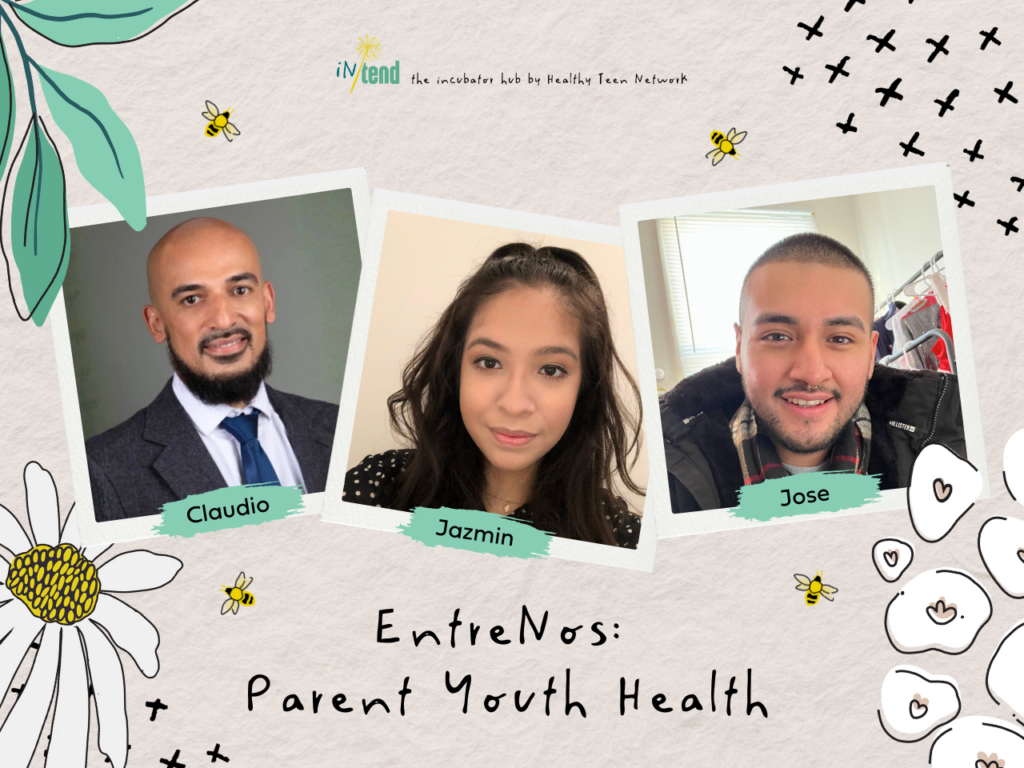
EntreNos: Parent Youth Health
Meet the Team
Jazmin Pacheco is a first-generation Mexican-American who holds a Master’s in Public Health with a focus on Global Health Equity. She is currently a Bilingual Health Educator at Ann and Robert H. Lurie Children’s Hospital, where she facilitates sexual health education in various West- and Southside Spanish-speaking Chicago Public Schools. She has over five years of experience working with a range of children and adolescents within healthcare settings, community partners, and school classrooms in the greater Chicago area. Jazmin aims to better support parents and caregivers, alongside her passion for maternal and adolescent health, while still being open to talk about any pop culture drama.
Jose Dominguez Magdaleno holds a Bachelor’s in Fine Arts in Theatre Arts with a double major in Latin American and Latino Studies. They are currently a Bilingual Health Educator at Ann and Robert H. Lurie Children’s Hospital, where they facilitate sexual health education workshops in the City of Chicago in Latine Spanish-speaking communities. They are also drag artists who love to connect with their artistic feminine selves while creating spaces of joy and community across a range of settings (we love my drag queen, Paloma!). Jose’s dreams, hopes, and values are rooted in his upbringing as a first-generation Mexican American born and raised in the beautiful state of New Jersey.
Dr. Claudio Rivera is a bilingual clinical-community psychologist providing treatment and training in evidence-based mental health for children, adolescents, and adults in community, hospital, and school settings. He partners with young people on participatory action research to examine ways systems of care can be held accountable for improving the mental health needs of communities who are pushed to the margins. Specifically, Claudio seeks to use the tools of scientific inquiry to shift the research gaze of accountability to the structures responsible for providing care to communities that have been structurally abandoned.
Their Challenge or Focus
Our team wishes to address the intersection of mental well-being with sexual health education through a social justice, trauma-informed, and cultural awareness lens to Spanish-speaking Latine parents/caregivers. Through this process, we wish to engage community members, such as masculine figures who might not often be in the room. We will accomplish this engagement by creating and developing an all-encompassing sexual-health education workshop within a mental wellness scope as a means to allow parents and caregivers to start sexual health conversations with their young people, regardless of parental/caregiver role.
Why They Applied
Our team sought to apply to the In/Tend Incubator Hub to discover new opportunities for engagement and learning with our Latine Spanish-speaking caregivers. We recognize that we may not have all the tools to deliver an all-encompassing curriculum workshop, but we have the right passion and ambition.
In/Tend can help guide our passion project by helping us break free from tunnel vision and build new strategies for thinking.
In/Tend can help guide our passion project by helping us break free from tunnel vision and build new strategies for thinking. Additionally, joining In/Tend allows us to expand resources, connections, and opportunities for our Latine community in Chicago, which faces a scarcity of sexual health education materials. We are extremely grateful that In/Tend opens a window of opportunity for us to meet other organizations in the U.S that also share similar project goals and can also be a source of support. Our team is extremely satisfied with our decision to choose In/Tend, as their coaching helps us center our work on our Latine community and will eventually help us grow as public health professionals.
One Thing They Have Already Learned
One thing our team has learned in our first weeks in the Hub is how we can branch out and find new tools to help us plan our project. Being introduced to and encouraged to use the collaboration platform Miro has really opened our teams’ eyes to innovative ways to take notes, create checklists, and have a space to be artistic. Each team member is used to falling back on the old, boring drawing board or paper-and-pencil method, so having to use a new application has allowed us to try something new as a team. We are thankful our In/Tend colleagues have taken the time to make the project innovative and enjoyable.
What They Are Looking Forward to in Their Innovation Journey
In our first weeks with the Hub, our team has learned valuable lessons about how we approach ideas and solutions. Each team member has experience in facilitating parent/caregiver workshops and has helped create educational material and resource guides. Naturally, we have come to believe that we are somewhat credible experts in adult and youth sexual health services. As every good professional, we are stepping out of our comfort zone and trying something new. Our team wishes to start at the beginning and pivot to how we can improve the way we deliver sexual health education, while also connecting it to mental wellness.
Ultimately, one thing we are looking forward to is starting fresh and learning from our parents/caregivers what they themselves need guidance with, instead of us coming in with what “we believe” is best for them. Our team strives to be part of the community alongside parents and caregivers, rather than a third party entering the community. Within the innovation journey, we are looking forward to opening our minds to new ways of thinking and avoiding old habits.
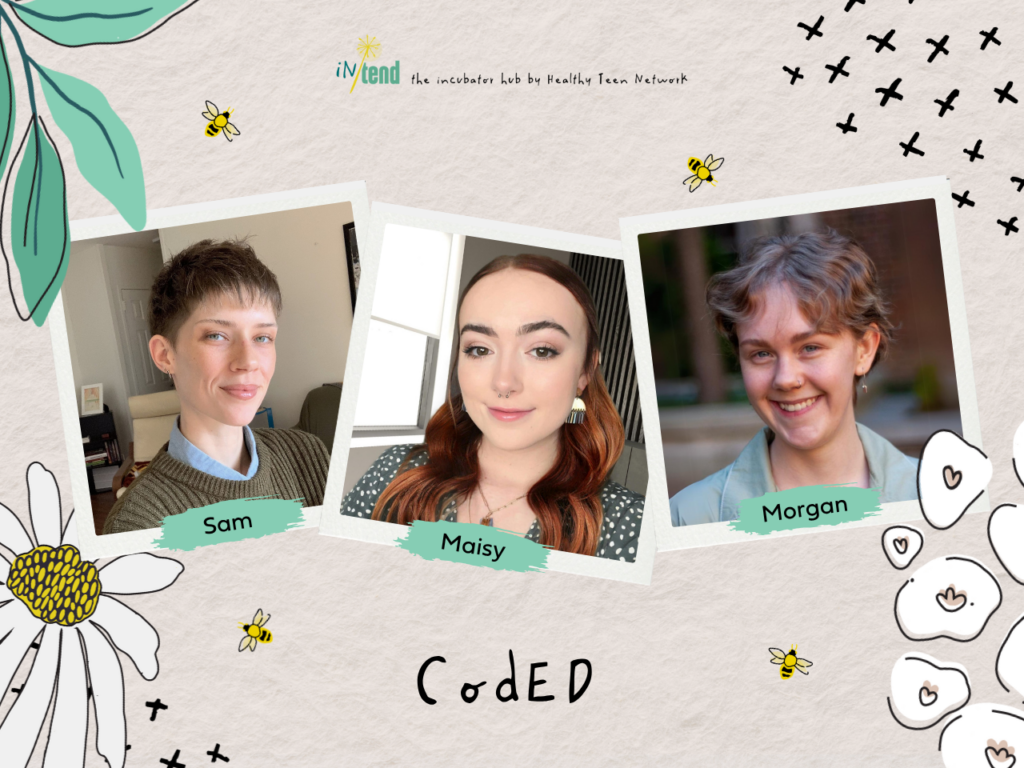
CodED
Meet the Team
Morgan Peterson is the office manager and youth support staff at the Transformation Project South Dakota. They work with young people every week, mentoring and supporting them through societal stigma and the everyday challenges of being a teen. They have years of experience in event planning, nonprofit fundraising, administrative work, and community organizing. They’re passionate about grassroots outreach for historically underrepresented people in rural communities and are committed to community-led initiatives that promote societal change.
Maisy Anderson is the Prism and Programs Director at the Transformation Project South Dakota. They work to assess community needs, develop programming to address community concerns, and evaluate program efficiency. They are passionate about using a human-centered approach to create solutions with their community, not just for it.
Sam Wakefield grew up in South Dakota and has recently returned after spending about seven years in both Chicago and New York City. Sam is the Content Coordinator for the South Dakota Transformation Project, where they manage the organization’s social media accounts and websites. They are passionate about making the resources, events, and education provided by the Transformation Project accessible to the community.
Their Challenge or Focus
Limited—and shrinking—access to comprehensive sex ed in rural communities.
Why They Applied
Our team applied to the second cohort after completing the first, because we wanted to continue what we started, gather more information from our end users, and find a solution that meets their needs. In this second cohort, we plan to do more prototyping and testing of our innovation to ensure it is useful.
One Thing They Have Already Learned
We enjoyed getting to know the other teams and our coaches! We find it interesting that even in such similar lines of work, there is so much to learn from the different groups and their experiences.
What They Are Looking Forward to in Their Innovation Journey
Our team is eager to continue prototyping and testing our innovation with end users in our community.
These teams embody the spirit of In/Tend—our commitment to innovation and action. Together, we’re planting seeds for a brighter, more just future.
Follow along as these innovators bring their ideas to life. We’ll be sharing updates, lessons, and inspiration from their journeys.
Interested in embarking on your own innovation journey? In/Tend is opening applications soon for our next Sprout: A Design Challenge, for those new to human-centered design, happening March 9-12 in Providence, RI.
If you are ready to join the 3rd cohort, our next application will open in the Spring of 2026. In the meantime, be sure you’re on our email list!
PHOTO BY: STEFAN KOSTIC
Allison Tomai Felsen is a Senior Communications Manager for Healthy Teen Network who provides design and communications expertise for projects and manages our website. Allison and her husband are proud parents of two pups and three cats. Read more about Allison.