
AUGUST 20, 2026
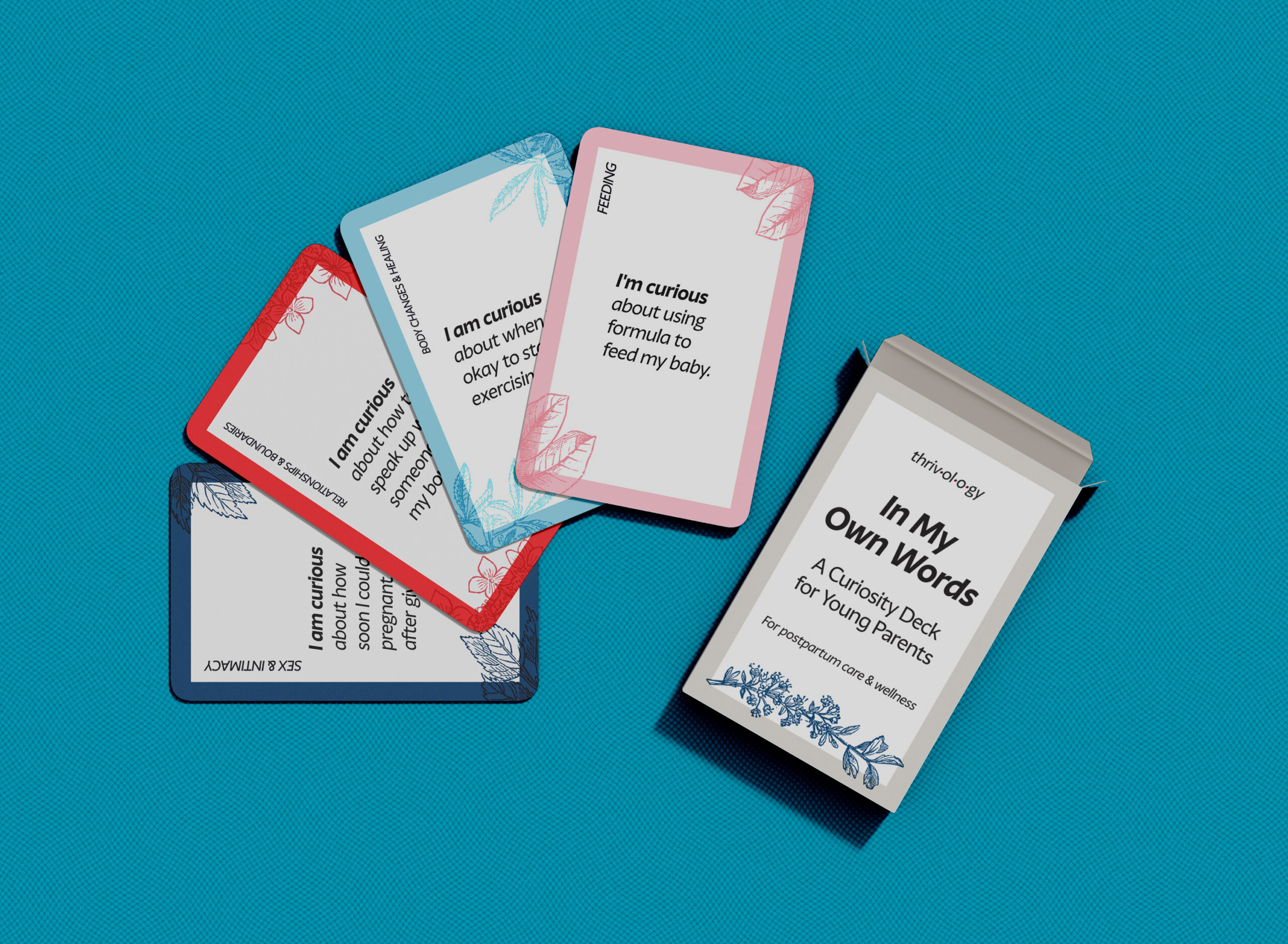
When we set out to create In My Own Words: A Curiosity Deck for Young Parents, we drew inspiration from conversation cards like We’re Not Really Strangers, Where Should We Begin, Q Card, and more. They’re all good at getting people to ask the real questions, have honest conversations, and build relationships.
In true human-centered design spirit, we tested our Curiosity Cards idea and sought feedback from young parents and youth-supporting professionals. Not only did they tell us that this was exactly the kind of information that would have been helpful during their postpartum journey, but they unanimously loved the card format.
So, what is it about a stack of cards that makes people want to pick them up or feel comfortable opening up?
So, what is it about a stack of cards that makes people want to pick them up or feel comfortable opening up?
Is it their size—small enough to hold in your hands or carry around?
The fun of shuffling through and finding what speaks to you?
Or maybe just the novelty of it?
What the research says
As we looked into it, here’s what we found:
- Conversation cards give people social permission to explore personal topics without feeling awkward or intrusive.
- Cards let you outsource the awkwardness. As one writer puts it: “It isn’t me who is making the questions; it is the cards. That deep, slightly odd question? Not me, the cards :)…but I’d really love to hear your answer.”
- Cards turn a hard conversation into something that feels closer to a game. They reduce the pressure to start, making it easier to open up naturally. They also make it easier for you to keep going and “create conversational momentum. …We think less and answer more.”
- Cards create “a sense of turn-taking and reciprocity.” Being able to pass them from person to person creates this structure for sharing → listening → asking → answering.
- Cards also give you permission to skip uncomfortable questions. That’s a way to practice (and enforce) our own boundaries without having to have the actual ‘talk.’
In short, conversation cards can make it easier to have deeper, more meaningful conversations, especially around sensitive topics like sexual and reproductive health.
Putting it into practice
We took all these learnings and applied them to the Curiosity Cards. After talking to many young parents and professionals, we realized we wanted the cards to work both ways: useful on their own for young parents, but also a great resource for the professionals who support them (including but not limited to OB-GYNs, midwives, doulas, nurses, lactation consultants, pelvic floor therapists, and social workers).
The cards work in (at least) three different ways:
- Young parents can read the information on the back of the cards on their own and have the option to continue the conversation with professionals they trust.
- Professionals can introduce the cards to young parents (or any of their clients, for that matter).
- Professionals can introduce the cards to other professionals, spreading awareness of young parents’ needs and widening their support network.
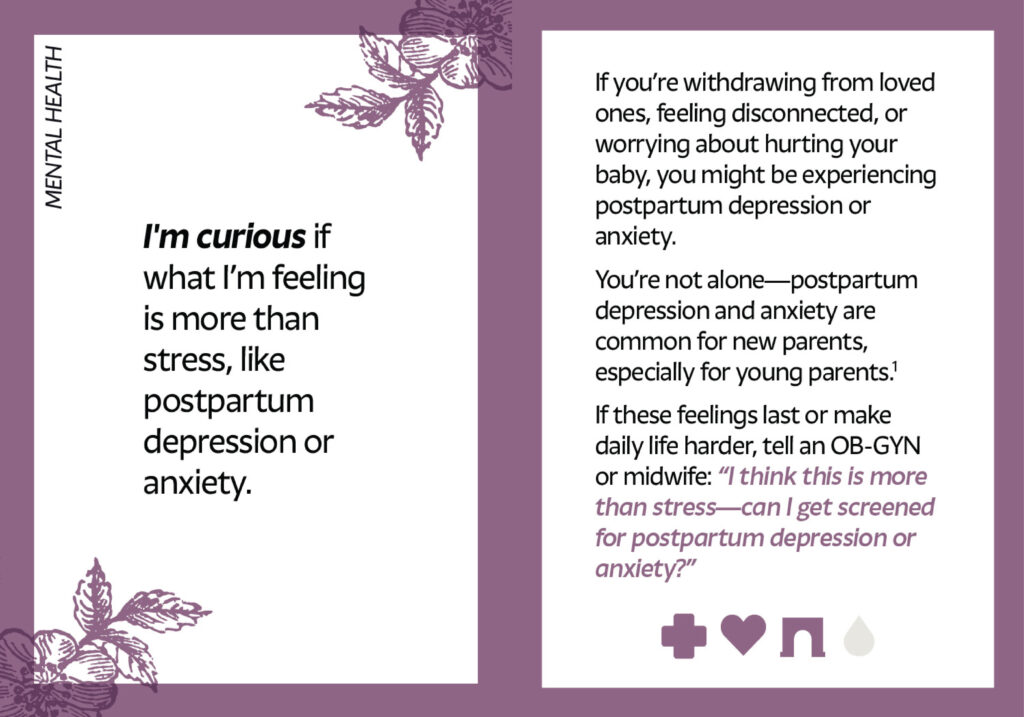
The Curiosity Cards:
- Provide information about postpartum care that young parents may already be wondering about or may not otherwise know. The information is specific, medically accurate, and actionable.
- Validate young parents’ feelings about complex issues like postpartum depression and body image seriously, without minimizing them.
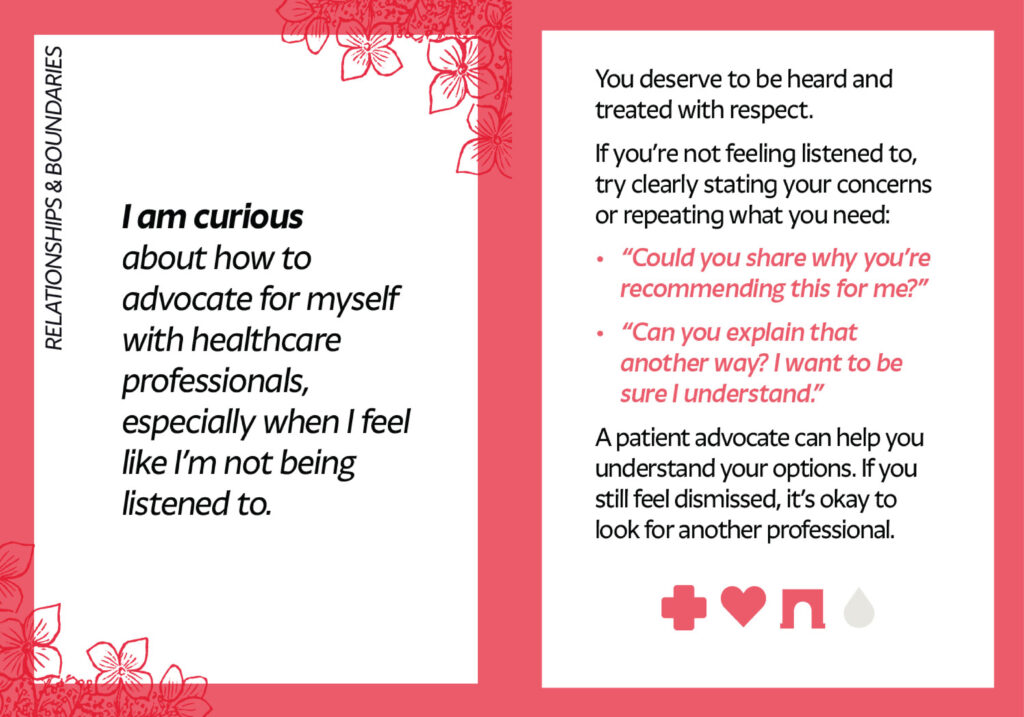
- Give young parents the agency to bring up these topics with healthcare providers.
- Encourage young parents to advocate for themselves, even with family members who aren’t respecting their boundaries.
- Offer language young parents can use, or adapt, when they can’t find the words to talk about these topics.
- Introduce young parents to types of providers that they may not know exist, broadening their knowledge and support system. As one young parent told us, “Even knowing that someone like a lactation consultant exists would’ve been helpful in my journey.”
- Don’t put all the responsibility on young parents. Providers can take the initiative, too, by reading the topics young parents are wondering about, then introducing the cards to them as a friendly way to invite meaningful conversations.
At the end of the day, though, the cards won’t do it all. They can initiate and facilitate conversations, but we still must be vulnerable and willing to meet people where they’re at.
As psychologist Dr. Patrice Le Goy notes, “These prompts don’t become an automatic way to build relationships. You still have to do the work of understanding where people are, what they’re comfortable with and what their boundaries are.”
Patricia is a curious learner who loves to ask questions and find patterns. If you look closer, you might see a literal light bulb above Patricia’s head when she sees a connection or realizes something in her research. Patricia loves using those insights to co-create changes—big or small—that make the world a better place. Having grown up in three different countries, Patricia sees the world differently and always makes time for travel. In her free time, Patricia can be found browsing offbeat Airbnbs or walking her sweet, black cat on a leash (yep—it’s one of Patricia’s proudest accomplishments). Read more about Patricia.