
JANUARY 8, 2026

JANUARY 8, 2026
A few years ago, during a job interview for a leadership role in an education-focused nonprofit, the interviewer asked me a question I had never truly considered:
“How do you show up in stressful moments? What will I see from you when something goes wrong?”
The question stopped me—not because I lacked an answer, but because I had never examined how my response was serving me or the people around me.
I know encountering challenges and stressful moments in a role, leadership or otherwise, is a given.
I know encountering challenges and stressful moments in a role, leadership or otherwise, is a given. In our body, stress can quicken our heart rate and sharpen our focus—in other words, get us ready to face a challenge. It’s not inherently bad in small doses, but it’s not comfortable either. And we all deal with stress differently.
My honest response to how I show up when stressed is this: I jump into action. Fast. When something goes wrong, I immediately move to fix it. I’ve always taken pride in being the person who can be counted on to leap in and “do something.”
But as I sat with the question, I realized something uncomfortable: I didn’t know how my rush to do something was really working for me or others who are in that stressful moment with me. Some situations do require immediate, decisive responses—but many don’t. Viewing every stressful moment as a crisis to solve can cause more harm than good. And treating everything as urgent is one of those white-dominant cultural norms Tema Okun describes. If my default setting was fast solutions, I was likely missing opportunities to be more thoughtful, more collaborative, and maybe even more vulnerable as I managed challenges.
What I Learned from Slowing Down
That interview question opened a window for reflection. It pushed me to reflect not just on what I do during stressful times, but why. I began noticing how often I skipped over the emotional experience—mine and others—in favor of momentum. Productivity as coping.
But rushing to move past moments of stress can lead me to:
- Make decisions without the full picture
- Take on too much alone
- Leave others out of the process
- Ignore my own emotions until they resurface later
So, I began practicing something different: pausing. Even for a couple of breaths. Even when things felt urgent.
That pause lets me:
- Recognize the stress response in my body
- Notice what’s triggering it
- Consider the impact of different paths
- Check in with the people who will move through the moment with me—or be affected by my decisions
In that pause, intentionality replaces urgency. The pause makes room for collaboration and creativity instead of go-it-alone quick fixes. The pause helped me to be less driven by the stress reaction, so I can refocus on the bigger picture and what really matters.
Tools that Helped Me Shift My Approach to Stress
The goal of grounding isn’t to mask or avoid stress, but to find stability within it.
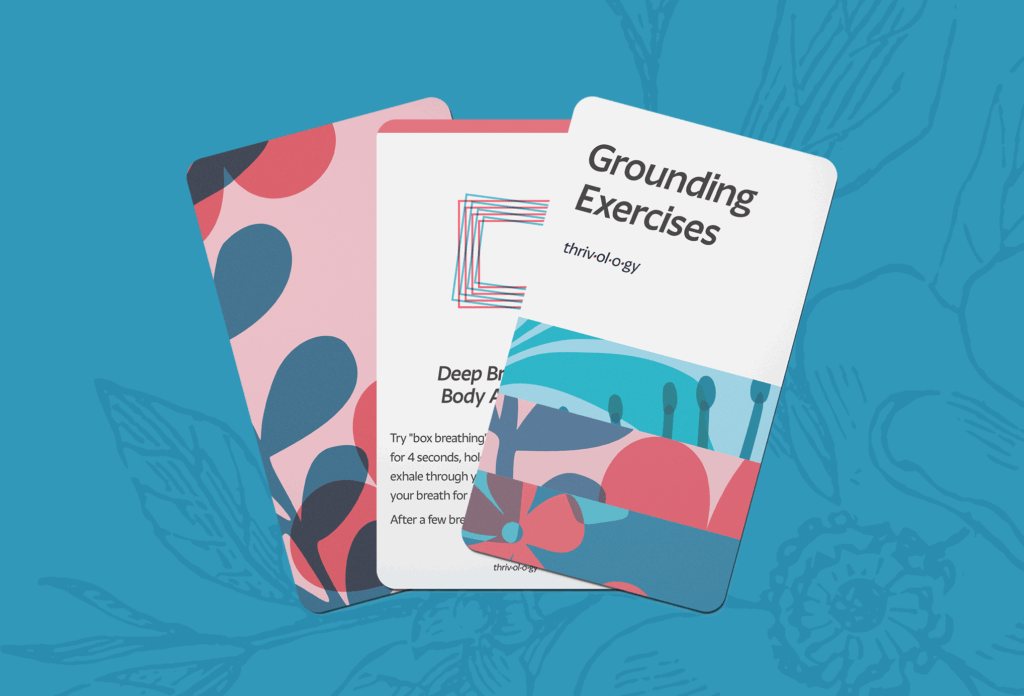
One of my favorite tools to help me during that pause is Thrivology’s Grounding Exercises. These exercises have been so supportive of my efforts to pause during challenging, stressful moments. They are simple ways to reconnect mind and body so I can shift from reactivity to presence. The goal of grounding isn’t to mask or avoid stress, but to find stability within it. Even ten seconds of grounding before I jump into problem-solving helps me move through the stress rather than push past it.
If you want to try grounding practices yourself, here’s a helpful guide.
So—How Do You Show Up in Times of Stress?
We all respond differently to stress. Some of us sprint into action. Some freeze. Some gather people close; others go inward. There’s no “right” response, but there are more intentional ones. And when we respond with intention, we open the door to more collaboration, creativity, and care—for ourselves and others.
PHOTO BY: PEDRO FIGUERAS
Randa has a knack for anticipating challenges before they even arise—credit her parents for instilling a lifelong habit of imagining every “what-if” (yes, that means she always packs snacks, just in case). This superpower has fueled her work in designing and improving dozens of innovative health education programs from the ground up. Stubbornly principled and guided by her north star—making her community a little fairer, a little more just—Randa brings both strategic vision and thoughtful action to everything she does. When she is not busy solving problems or dreaming up new ideas, you will find her surrounded by trees, elbows deep in clay at the pottery wheel, planning her family’s next big adventure, or curled up on the couch with her kid, her cat, and a good book. Read more about Randa.