
APRIL 16, 2026
Young people involved in child welfare services face persistent disparities in sexual and reproductive health (SRH), including limited access to contraception and delayed or incomplete sexual health education. Research and interventions have focused on identifying and reducing individual-level risk factors (very important stuff!), but less is known about factors that promote access to SRH.
What we wanted to know
In a recent study, we examined whether having a non-parental supportive adult (i.e., someone a young person says they can trust and turn to for guidance) is associated with two indicators of contraceptive access:
- Receiving contraceptive information or education
- Knowing how to obtain contraception
What we did
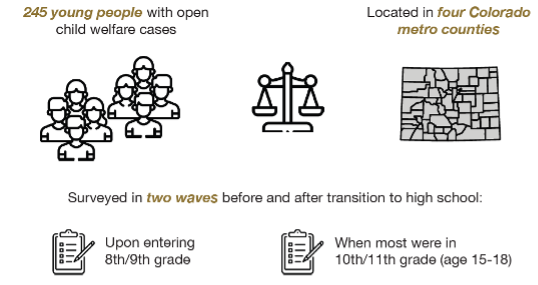
We followed 245 young people with open child welfare cases due to maltreatment within the family at two points in adolescence: early adolescence (8th/9th grade) and mid-adolescence (about 2.5 years later, when most youth were in 10th/11th grade).
What we found
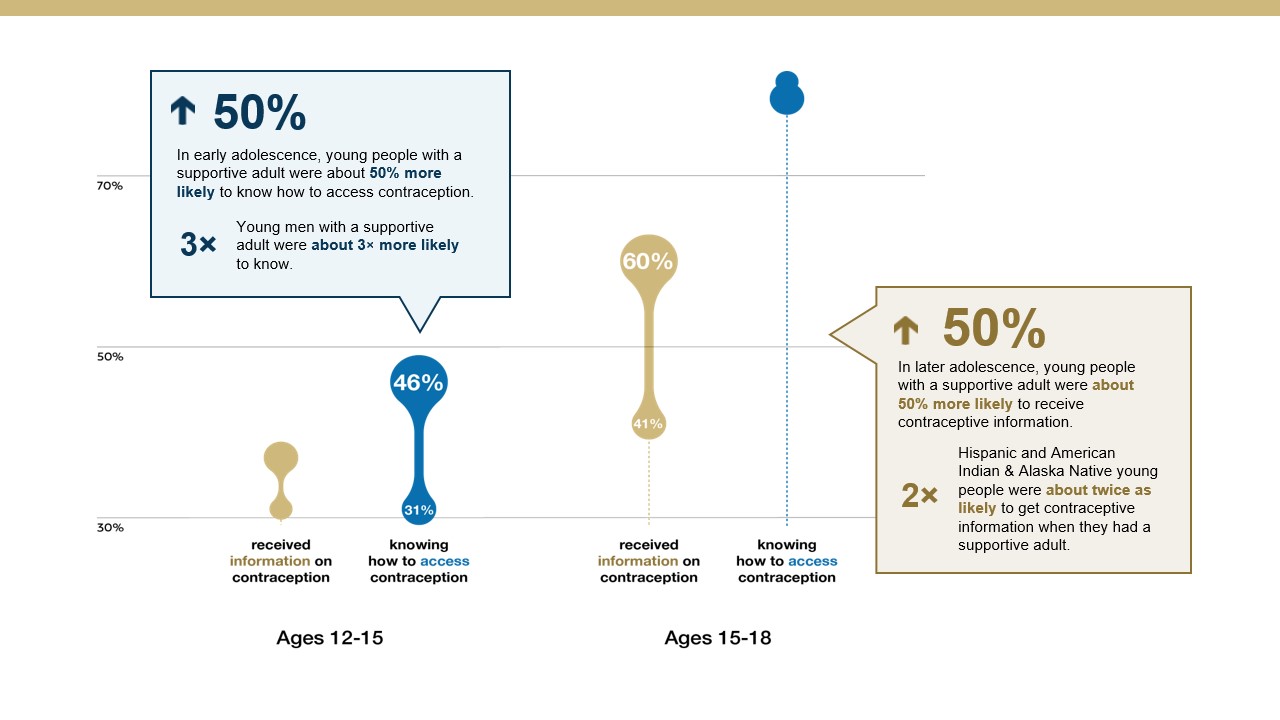
Young people with a supportive adult were…
- More likely to know how to access contraception in early adolescence
- More likely to have received contraceptive information in the past year in mid-adolescence
We also looked at these associations within subgroups (e.g. race/ethnicity groups, gender, grade, and in-home vs out-of-home placement).
- Young men with a supportive adult were about 3× more likely to know how to access contraception compared to males without a supportive adult.
- Hispanic and American Indian & Alaska Native youth with a supportive adult were about 2x as likely to get contraceptive information in later adolescence compared to youth with these identities who did not have a supportive adult.
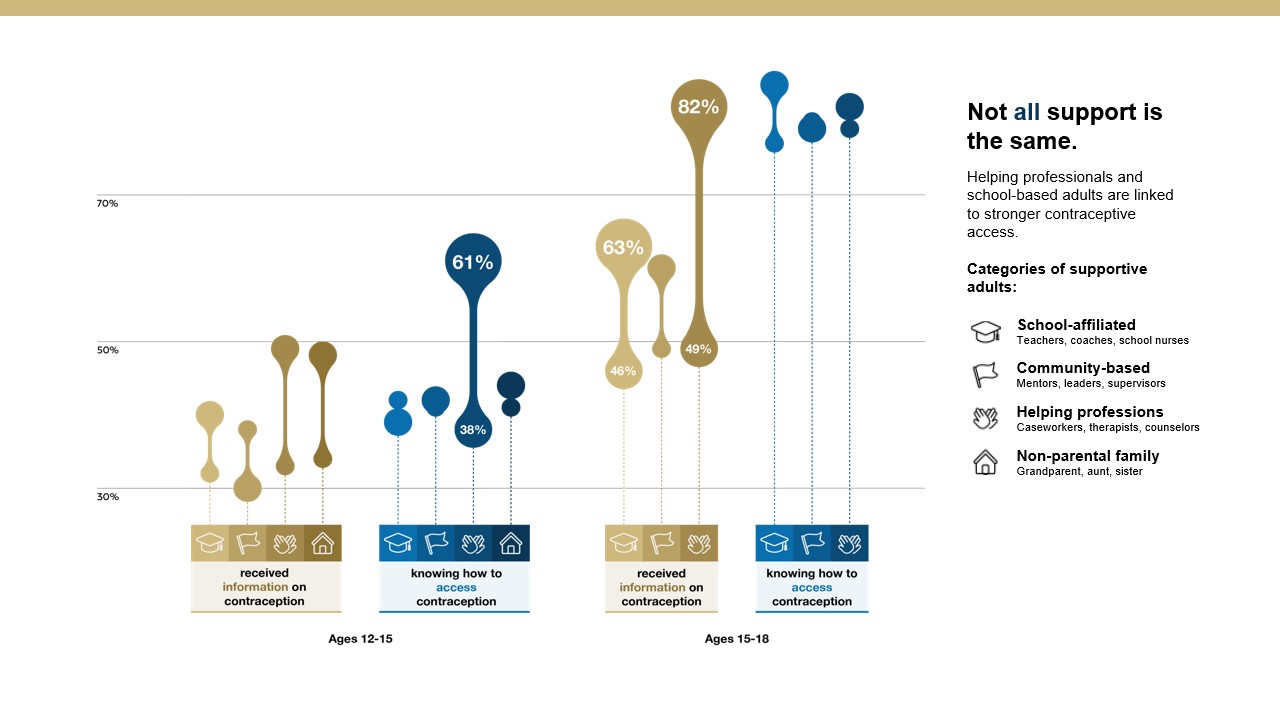
We also examined whether the type of supportive adult mattered.
- Young people reported a range of supportive adults, which we categorized into 4 groups: school-affiliated (e.g., teachers, coaches), helping professionals (e.g., caseworkers, therapist), community-based (e.g., youth pastor, formal mentoring program), and non-parent family members (e.g., aunt, grandparent).
- Helping professionals and school-affiliated adults were more strongly linked to indicators of contraceptive access, likely because they are more directly connected to resources and referrals.
What does this mean for practice?
You don’t have to be a sexual health expert to improve access—you have to be a trusted, caring adult.
For youth-supporting professionals, this study reinforces that you don’t have to be a sexual health expert to improve access—you have to be a trusted, caring adult.
That said, supportive adults are most effective when they are also:
- Equipped with accurate information
- Comfortable discussing sensitive topics
- Able to connect young people to services and resources
Programs that train caregivers, caseworkers, and other youth-supporting professionals to engage in these conversations—and to build strong, authentic relationships—are a critical part of the solution.
Implications for systems and policy
As child welfare systems increasingly shift to serving young people in their homes with their families and reducing time in foster care, it’s essential to ensure that all young people have access to non-parental supportive adult relationships regardless of where services are received (in home or out-of-home). Many existing supports (like mentoring programs or transition services) are tied to foster care placement. Our findings suggest that young people receiving services at home may have similar needs but fewer structured opportunities for connection.
Interested in hearing more about our findings and sharing questions and comments with colleagues? Join us May 14, 2026, at 2PM ET for a virtual coffee chat.
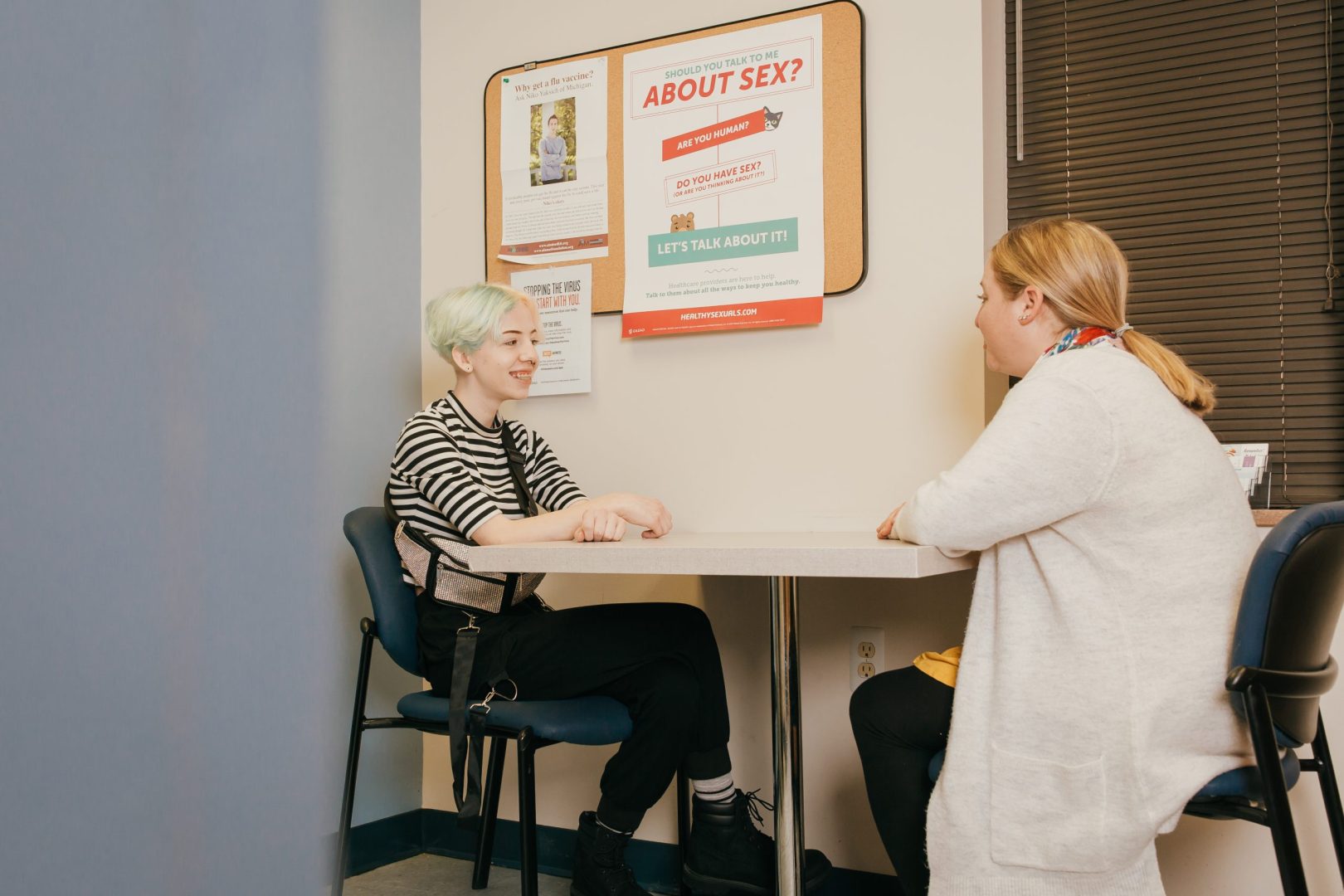
Photo By: Reproductive Health Supplies Coalition
Katie Massey Combs is a Research Associate at the University of Colorado Boulder in the Institute of Behavioral Science. Her research focuses on the prevention of behavioral health problems and the promotion of well-being among vulnerable youth, specifically unwanted pregnancy among youth involved in foster care. Trained in social work and public health, she is keenly interested in interdisciplinary and applied research to understand what works, and in using research to inform practice and policy. Read more about Katie Massey Combs.