
APRIL 13, 2026
Every April, Black Maternal Health Week—observed from April 11–17—calls the nation to reflect and act in support of Black maternal health. Led by the Black Mamas Matter Alliance (BMMA) and aligned with National Minority Health Month, this year’s observance marks a decade of advocacy, community building, and collective power. At its core, the week reminds us that advancing reproductive justice is not only about addressing disparities, but also about honoring the lived experiences of Black mamas and birthing people.
As conversations around reproductive health continue to shift, I find myself thinking deeply about young Black mothers—those most often overlooked by systems meant to support them yet profoundly impacted by the care they receive.
As conversations around reproductive health continue to shift, I find myself thinking deeply about young Black mothers—those most often overlooked by systems meant to support them yet profoundly impacted by the care they receive. Their journeys are shaped not just by access to services, but by whether they are seen, heard, and treated with dignity along the way.
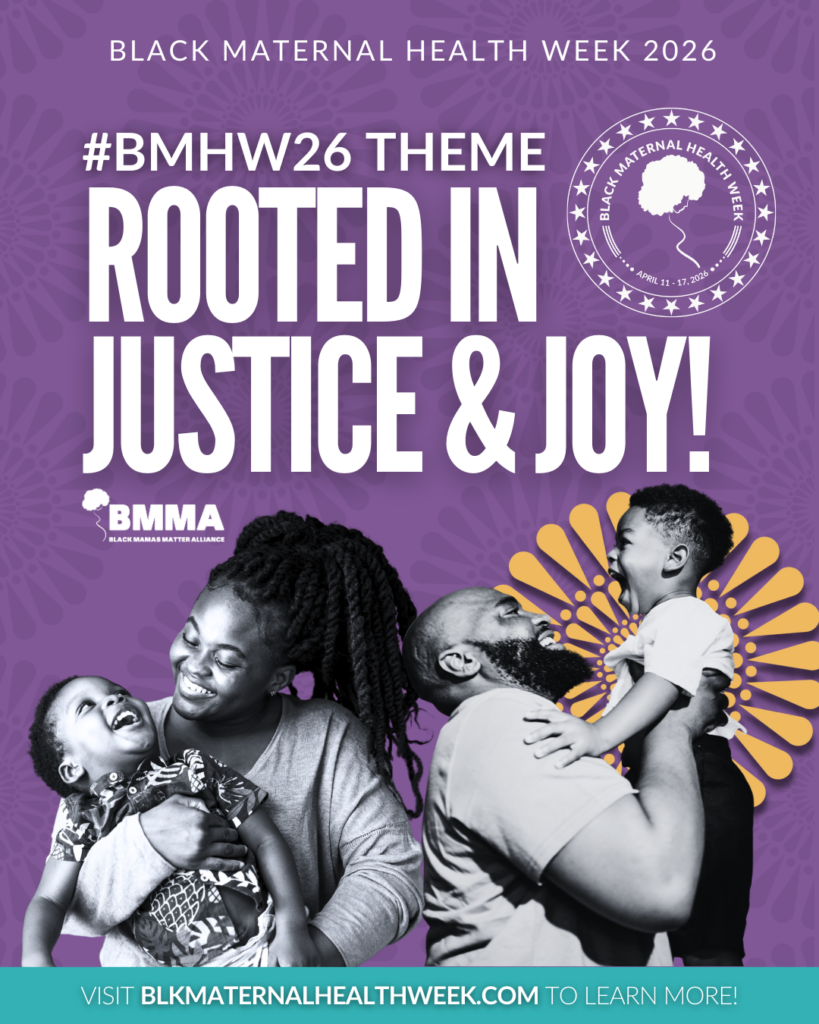
This year’s #BMHW26 theme, Rooted in Justice and Joy, invites us to imagine a future beyond survival. A future where young Black mothers are no longer navigating fragmented systems alone but are supported in ways that allow them to thrive—safely, respectfully, and with space for rest, healing, and joy. It pushes us to consider what becomes possible when justice is not the end goal, but the foundation for joy.
What it means to center young Black mothers in the reproductive justice movement
Centering young Black mothers in reproductive justice means moving beyond awareness into action. It requires honoring their full humanity—their choices, their autonomy, and their right to experience pregnancy, parenting, and care with both safety and joy. Justice, in this sense, is not abstract. It is lived. It shows up in systems that listen, in care that responds, and in spaces that allow young mothers not just to be supported, but to lead, heal, and thrive.
What this looks like in practice
Across the country, youth-supporting organizations are modeling what it looks like when justice is practiced with intention. For me, this work is deeply personal. During my time volunteering with Ybor Youth Clinic, I partnered with healthcare providers to bring my lived experience as a young Black youth-supporting professional into the space.
What stood out most was not just the services offered, but how care was delivered. Young people were met with respect, free from judgment, and with a genuine commitment to listening. It reinforced an important truth: Centering young mothers is not only about what support exists, but also how that support is experienced.
We also see growing investment in teen-focused doula programs that provide one-on-one, continuous support throughout pregnancy and postpartum, helping young mothers feel informed, supported, and heard.
Community-based efforts like the Black Infant Health Program further highlight the importance of connection, peer support, and culturally responsive care. Together, these approaches reflect a shift from justice as policy to joy as practice. They demonstrate how intentional support allows young Black mothers to feel seen, valued, and empowered to move through their journeys with dignity.
At Healthy Teen Network, this vision is not new. Our work has long centered young people and young families, ensuring they have the resources, support, and care they need to thrive. As Black Maternal Health Week reminds us of the work still ahead, it also challenges us to continue moving from justice to joy—by uplifting young Black mothers, honoring their leadership, and investing in the communities they build every day.
Photo By: Barbara Olsen
Christy Altidor, MPH, CPH, is a Project Manager in the Innovation and Research Department at Healthy Teen Network, holding over a decade of experience in sexual and reproductive health & justice, adolescent wellbeing, and health equity. When she’s not managing projects or facilitating a sexual health training, you can find her frolicking at a local coffee shop, taking a spontaneous solo trip, or spending quality time with her family, friends, and community. Read more about Christy.